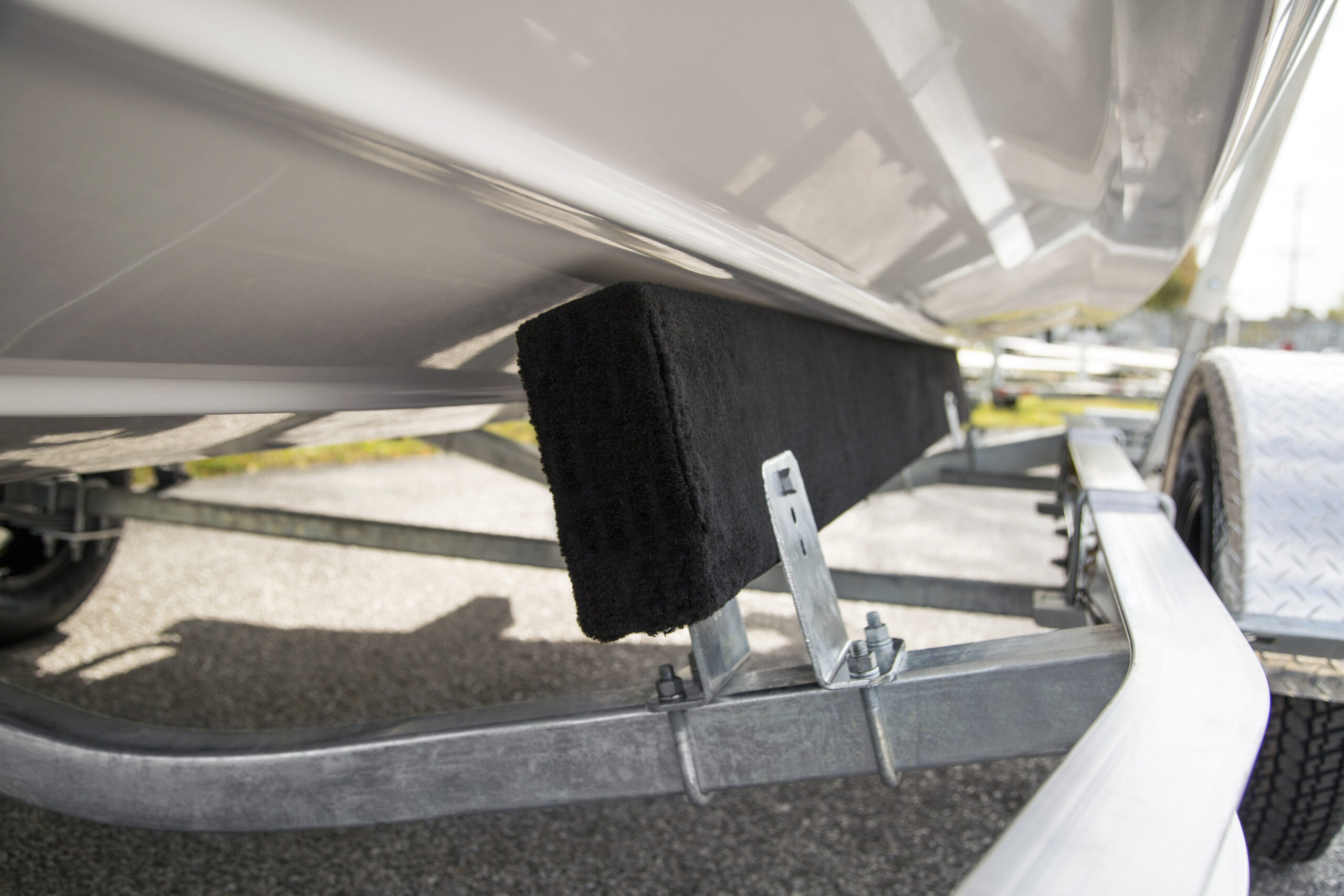
What Venture Trailers does before a trailer goes into production — and why it makes all the difference for dealers and boat buyers alike.
Most people don’t give the trailer much thought. They buy the boat, they buy the motor, maybe they spend a Saturday debating the right fish finder and then they order a trailer to haul it all. That’s understandable. Trailers aren’t glamorous. But here’s the thing: a trailer that doesn’t fit properly isn’t just inconvenient. It’s a safety problem, a maintenance problem, and for a dealer, it’s a customer service problem that shows up months after the sale.
At Venture Trailers, fitting a trailer to a boat is not a checkbox. It’s a craft. And it starts long before the trailer ever goes into production.
A trailer that’s close isn’t the same as a trailer that fits. Our goal is always to deliver something that requires little to no adjustment when it arrives.
It Starts With a Phone Call — and Then We Get to Work
When a dealer calls in with a boat make and model, that’s usually where the conversation starts. In many cases, it’s all we have. What happens next is where Venture earns its reputation.
We go find the information ourselves.
That means pulling the manufacturer’s published specifications – dry weight, fuel capacity, holding tank capacity, overall length – and then going beyond them. Because published specs don’t tell the whole story. They don’t account for a full tank of fuel. They don’t account for a live well, a battery bank, a tower, a full cooler, or the gear a family loads up on a Saturday morning. We build for how boats are actually used, not how they look on a spec sheet.
And when we can’t find what we need online? We pick up the phone and call the boat manufacturer directly. We’ve done it hundreds of times. We’ll do it hundreds more.
The boat manufacturer’s published weight is a starting point. The real weight — the weight that matters for safety and capacity — is a different number.
3,000 Match-Ups and Counting
Over the years, Venture has built and logged more than 3,000 boat-to-trailer match-ups in our internal database. Every time we go through the process of researching a boat, gathering measurements, modeling the configuration, and building the trailer- that work gets saved.
What that means for a dealer is simple: if you’re ordering a trailer for a model we’ve already worked through, we have a significant head start. The research is done. The 3D model exists. The build instructions are already written. You’re not starting from scratch, and neither are we.
It’s the kind of institutional knowledge that only comes from decades of doing this work and from being intentional about capturing it every single time.
Why ‘Close Enough’ Creates Problems Down the Road
Every hull is different. Two 23-foot boats from two different manufacturers can have meaningfully different hull shapes, weight distributions, deadrise angles, and keel profiles. A trailer built to a generic spec might hold both boats but it probably won’t support either one correctly.
When bunks aren’t positioned to contact the hull at the right points, bad things happen slowly. Stress concentrates in places it shouldn’t. Loading becomes harder. Launching becomes unpredictable. And fiberglass, given enough time under uneven pressure, starts to show it.
None of that is visible at delivery. It shows up six months later. A year later. When the customer is frustrated and the dealer is the one who gets the call.
Getting the fit right from the start isn’t just about quality, it’s about protecting the dealer’s relationship with their customer.
Dealers don’t always see what goes into a properly fitted trailer. But they absolutely feel the difference when something goes wrong with one that wasn’t.
The Six Measurements That Change Everything
When a dealer or retail customer can provide detailed hull measurements, we can shift the bulk of the configuration work directly to our factory floor. That means the trailer arrives dialed in- not dialed in enough, but actually right.
The six measurements that matter most:
- Bow eye height from keel: This tells us where to position the winch stand and how to set the bow support height. Get this wrong, and the boat won’t seat on the trailer correctly.
- Transom to bow eye length: This sets frame length and tongue length. It is not the same as the overall hull length and using the wrong number leads to a trailer that’s out of position from the start.
- Hull length: Works alongside transom-to-bow-eye measurement. Many manufacturers include swim platforms and bow pulpits in their published LOA. That number is not what we need.
- Transom deadrise: The angle of the hull bottom at the transom determines how we set up crossmembers and bunks. A trailer that doesn’t account for deadrise puts the boat on bunks at the wrong angle and the hull tells you about it eventually.
- Strake measurements from keel: Strakes and spray rails run along the underside of the hull. Bunks need to support the hull without sitting on top of them. These measurements let us set bunk position precisely so there’s no interference during loading or launching.
- Chine measurements from keel: Chines define the outer edge of the hull bottom. They’re the key reference point for side bunk positioning, where the trailer makes contact, and where it doesn’t.
We provide measurement forms on our website for every hull type — standard, pontoon, step hull, twin inboard, single prop inboard, and more. We also have a boat weight calculator for anyone who needs help determining the right trailer capacity. These tools exist because we want dealers and buyers to come to the conversation with the right numbers already in hand.
The Variable That Shapes the Whole Setup
The measurements matter enormously. But so does something more fundamental: what kind of boat is it?
An outboard, an inboard, an inboard/outboard, a jet drive – these aren’t just engine configurations. They’re weight distributions. A twin inboard places a significant amount of weight toward the stern, which changes where the axles need to sit. A jet drive requires clearance at the transom that doesn’t apply to an outboard application. A step hull presents challenges at the keel that a standard V-hull does not.
If the boat type isn’t communicated clearly, the trailer setup can be off in ways that aren’t obvious until the boat is on the water or on the ramp. We’re not looking at the boat in person. We’re working from the information we’re given. That’s why being specific about the boat type isn’t optional. It’s critical.
Then there’s the center of gravity and this one is worth being honest about.
Center of gravity is the point where the combined weight of the boat and everything on it is perfectly balanced. It determines where the axles need to sit, how much tongue weight the trailer will carry, and ultimately how the whole rig behaves on the highway. A trailer with the axles in the wrong position relative to the boat’s center of gravity can sway, fishtail, overload tires, or create dangerous handling even if everything else about the trailer is right.
Here’s the challenge: we can’t see it. Center of gravity isn’t published in a spec sheet. It shifts depending on how the boat is loaded, where the fuel is, where the gear is, how the engine sits. A heavy outboard on a center console behaves differently than the same hull with a tower and a full cooler aboard. We make our best determination based on boat type, hull design, and the information we’re given. But it’s one of the variables that reinforces why the more we know about a specific boat, the better the outcome.
This is also why axle placement gets real attention during the fit process. We’re not just centering the axles under the frame, we’re trying to put them where the load actually lives. Get that right, and the trailer tows the way it should. Get it wrong, and you’ll feel it on the highway before you ever feel it at the ramp.
Center of gravity is the one variable we can’t fully see. We make our best determination from everything we’re given which is exactly why giving us as much as possible matters.
We Build a 3D Model Before We Build the Trailer
Once we have the measurements and the boat details, we don’t go straight to production. We go to a 3D model first.
Using the information provided, we create a detailed model of the trailer configuration – bunk placement, bunk length, tongue length, frame length, winch stand position. Every key dimension gets set the way it should be when the trailer is built, not adjusted to approximate it after the fact.
From that model, we generate specific assembly instructions that go directly onto the production work order. The team building the trailer isn’t guessing. They have a road map built from the actual measurements of the actual boat.
That’s the difference between a trailer that fits and a trailer that mostly fits.
We build a 3D model of every configured trailer before it goes into production. That’s not standard in this industry. For us, it’s just how we do it.
What This Means If You’re a Dealer
Every minute your team spends on the shop floor adjusting a trailer that should have arrived right is a minute they’re not spending on something else. Setup time adds up. Callbacks add up. Customer frustration adds up.
When you order a Venture trailer with full measurements, you’re not just giving us more information -you’re buying back time. You’re buying back clean deliveries. You’re buying back confidence that when a customer hooks up and heads to the ramp, it’s going to work exactly the way it should.
And for older boat models, boats where the manufacturer is long gone or the original drawings no longer exist, dealer-supplied measurements aren’t helpful. They’re the only path to a proper fit. In those cases, the process we’ve built around gathering and using that information is the difference between a trailer that works and one that doesn’t.
What This Means If You’re a Retail Buyer
If you’re purchasing a new boat and sourcing a trailer through your dealer, this process is happening on your behalf. Ask your dealer about it. A good dealer is already working with their trailer manufacturer to get this right.
If you’re replacing an older trailer or buying independently, the more information you can provide or have your dealer gather from the boat the better the outcome. Take the measurements. Fill out the form. The extra 20 minutes of effort upfront can save hours of frustration later.
We’ve made the tools available because we want this process to be as easy as possible. The boat weight calculator, the measurement forms, the fit guide-they’re all there. Use them.
At the end of the day, a trailer is a piece of equipment. But a properly fitted trailer is something else entirely — it’s peace of mind on the highway, confidence at the ramp, and one less thing for a dealer or a boat owner to worry about. That’s what we’re building toward every time someone calls in with a make and a model.